
General information, not a diagnosis or personal treatment plan. For urgent symptoms, seek emergency medical care rather than using an appointment form.
A sudden, extremely painful headache, new weakness, confusion or difficulty speaking needs urgent emergency assessment. Do not wait for an appointment request.
Understanding this concern
Migraine can cause a throbbing headache, nausea and sensitivity to light or sound. Some people also experience visual or sensory changes called aura. Headaches have different causes; assessment helps determine the next step.
Symptoms to discuss
- Recurrent or disruptive headaches
- Nausea or sensitivity to light and sound
- A headache pattern that is changing or worsening
How it may be evaluated
Tell your clinician when headaches began, how often they occur and how they affect daily life. Further investigation depends on your history and examination; a scan is not automatically needed for every headache.
Investigations are selected for the individual. Contact the clinic to confirm where any prescribed imaging can be arranged.
Treatment & support
Management may involve medicines for attacks, preventive treatment and discussion of possible triggers. The appropriate approach depends on the headache type and your circumstances.
When to seek help
Arrange an assessment for severe, worsening or difficult-to-manage recurrent headaches.
At Hyderabad Neuro Centre
Headache is listed among the clinic’s specialties. Ask about consultation availability; specific migraine treatments must be confirmed with the clinician.
Meet Dr. Gautham GundaboluMake the consultation useful for you
Organize the information you want to discuss. The following prompts can help you prepare questions without choosing a diagnosis or treatment yourself.
- A brief record of when headaches occur and how they affect work or home life.
- What you have already tried and what you would like clarified.
- Ask whether further investigation is appropriate and how follow-up would be planned.
Ask the clinic about fees, appointment length and any documents required. See the first-consultation guide for practical planning.
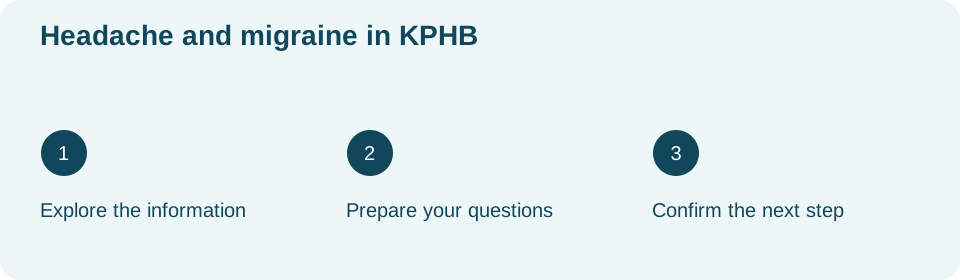
Headache and migraine in KPHB: plan your next step
Describe the pattern, not just the pain
For a headache consultation, it can help to distinguish an occasional episode from a pattern that is changing. Note when episodes happen, roughly how long they last and what you were doing beforehand. Describe how the discomfort affects ordinary activities, concentration and sleep. If other symptoms occur around the same time, write down the sequence in your own words. You do not need to decide whether the problem is migraine before seeking an assessment.
Prepare questions about your current approach
Bring details of prescribed medicines and any non-prescription products you use for headaches. Ask which information would be useful in a headache record and when you should arrange another discussion. A consultation can be used to clarify what is being considered, whether any tests are appropriate and what changes should prompt urgent help. This website does not recommend a medicine or dose, and it does not establish that a particular headache treatment is suitable for you.
Sources & content status
Prepared 7 November 2026.
Clinical information describes general care. A listed treatment or investigation is not a claim that every option is available at this clinic.