

General information, not a diagnosis or personal treatment plan. For urgent symptoms, seek emergency medical care rather than using an appointment form.
Sudden weakness, new difficulty speaking or breathing problems need urgent medical attention rather than a routine enquiry.
Understanding this concern
Peripheral neuropathy affects nerves outside the brain and spinal cord. Symptoms vary with the nerves involved. Muscle weakness can also have other causes and needs assessment.
Symptoms to discuss
- Tingling or reduced sensation
- Burning or shooting pain
- Weakness or balance difficulties
How it may be evaluated
A clinician may examine sensation, strength and reflexes. Blood tests, nerve conduction studies (NCS) and electromyography (EMG) may be considered to investigate the cause.
Investigations are selected for the individual. Contact the clinic to confirm where any prescribed imaging can be arranged.
Treatment & support
Management depends on the underlying cause and symptoms. Options may include treatment of an underlying condition, prescribed pain treatment or support for weakness.
When to seek help
Arrange assessment for ongoing numbness, nerve pain, weakness or balance changes.
At Hyderabad Neuro Centre
The clinic lists neuropathies, muscle disorders, NCS/RNS and EMG. ALS-specific services are not verified. MS affects the central nervous system and is not grouped here as peripheral neuropathy.
Meet Dr. Gautham GundaboluMake the consultation useful for you
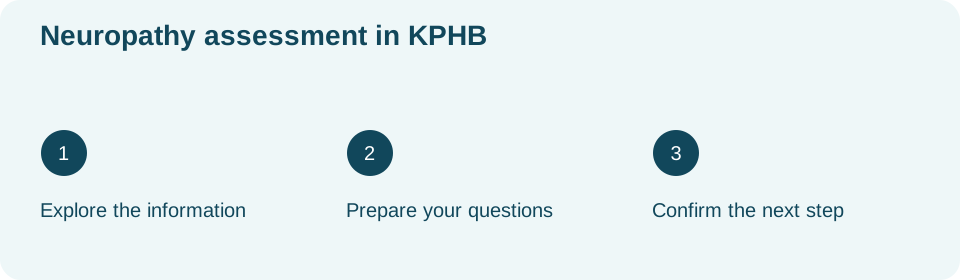
Organize the information you want to discuss. The following prompts can help you prepare questions without choosing a diagnosis or treatment yourself.
- Where you notice altered sensation or weakness and its impact on daily tasks.
- Previous blood tests or nerve-study reports you want discussed.
- Ask why a particular investigation is being considered and what happens after it.
Ask the clinic about fees, appointment length and any documents required. See the first-consultation guide for practical planning.
Neuropathy assessment in KPHB: plan your next step
Describe sensation and strength separately
People may use the word weakness to describe different experiences. Explain whether the concern is reduced strength, pain limiting movement, unusual sensation or another difficulty. Note the areas affected and the tasks that have become harder. Everyday examples can help a clinician understand the history; they do not establish which nerve, muscle or other structure is responsible.
Understand the purpose of nerve and muscle studies
The practice lists nerve conduction studies and EMG among its services. If a test is proposed, ask exactly which investigation is requested, why it may be useful and what preparation applies. A consultation page should not be used to select a test independently. Existing investigations and other medical history may influence what the clinician considers next.
Plan questions about ongoing support
Ask how findings will be explained and who will discuss any reports. Bring previous results you want compared and explain what you hope to understand about daily activities or persistent symptoms. Neither the presence of testing equipment nor a list of services guarantees a particular diagnosis or treatment outcome. Confirm current service availability before making a separate journey for a test.
Sources & content status
Prepared 7 November 2026.
- NHS: Peripheral neuropathy (opens in a new tab)
- NHS: Neuropathy diagnosis (opens in a new tab)
- Clinic specialties
Clinical information describes general care. A listed treatment or investigation is not a claim that every option is available at this clinic.